Mobile Truck Repair: Roadside vs Shop
When does mobile truck repair make sense versus a shop visit? A practical guide for Seattle-area fleet operators from Emerald Fleet Services in Sumner, WA.
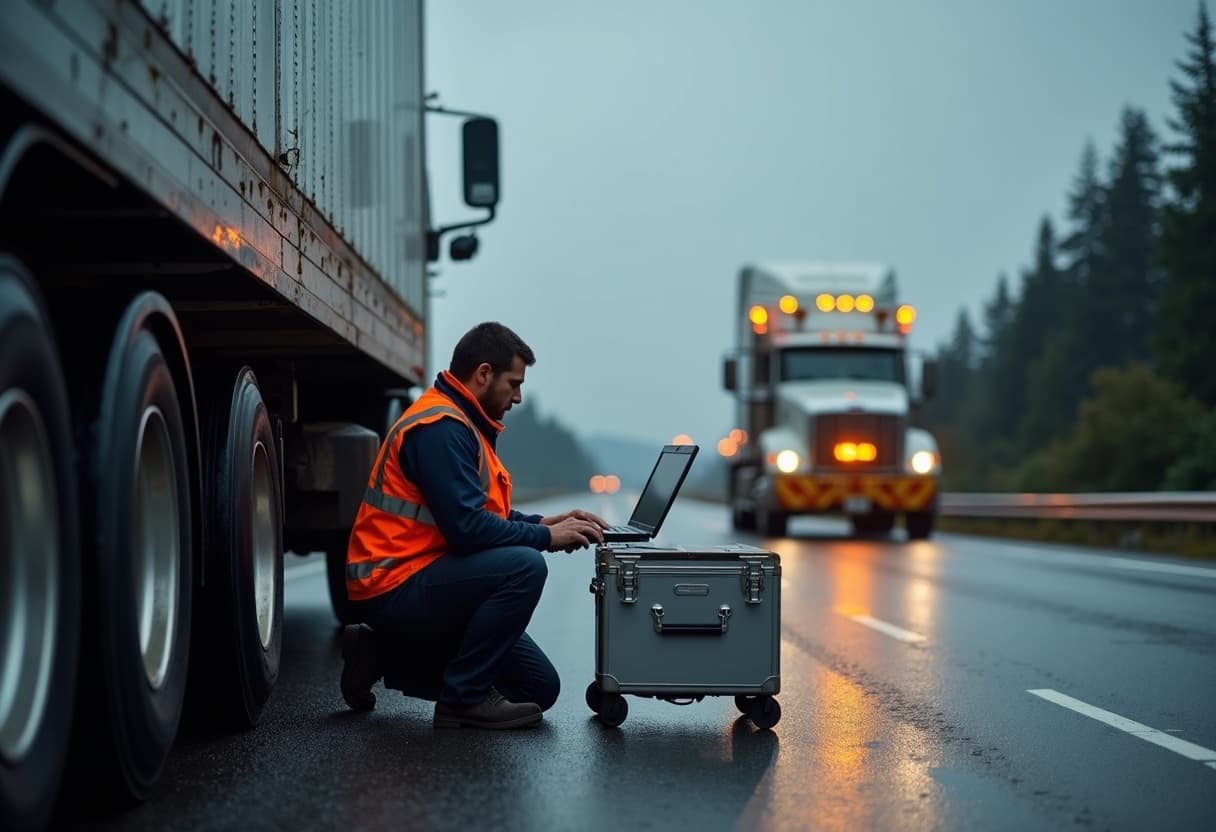
A truck sitting on the shoulder of I-5 with its hazards on is not just a mechanical problem. It is lost revenue, a late delivery, a frustrated dispatcher, and a driver who would rather be moving than watching traffic fly past. The question every fleet manager and owner-operator faces in that moment is straightforward: call a mobile repair unit to fix it on the spot, or tow it to a shop?
The answer depends on what broke, where it broke, and how much downtime you can absorb. Getting that call right can save a full day of lost revenue. Getting it wrong can turn a two-hour fix into a three-day ordeal.
When Mobile Truck Repair Makes Sense
Mobile repair shines when the problem is diagnosable and fixable without a lift, specialty tooling, or extended labor. For a full breakdown of what a mobile diesel mechanic can handle on a roadside call, see our mobile diesel mechanic guide. The most common scenarios where roadside or on-site mobile service is the right call:
Dead batteries and charging system failures. A truck that will not start because of a bad battery, loose connection, or failing alternator can usually be back on the road within an hour. Towing a truck for a battery replacement makes no sense when a mobile technician can test the system and swap the unit on-site.
DPF and emissions issues. A clogged diesel particulate filter or a failed regen cycle will trigger a check engine light and potentially derate the engine. Mobile technicians can run diagnostics, perform a forced regen, and clear the fault without pulling the truck off its route. For ongoing DPF care, our DPF and emissions service covers both mobile and in-shop cleaning.
Brake adjustments and air system faults. If a brake chamber fails or an air line develops a leak, a mobile unit can replace the component and get the truck DOT-compliant without a shop visit. This is especially valuable for trucks that cannot legally move with a brake defect.
Tire changes and minor leaks. A blown steer tire or a coolant leak on the side of the road does not require a full shop. Mobile repair handles tire swaps, hose replacements, and clamp fixes that get the truck to its next stop.
Preventive maintenance at your yard. Not every mobile call is an emergency. Many Seattle-area fleet operators schedule mobile oil changes, filter replacements, and inspections at their own yard. The truck never leaves its route, and the maintenance gets done on your schedule, not the shop's. If you are looking for mobile fleet maintenance near me, yard service is often the most cost-effective option.
When a Shop Visit Is the Better Call
Some repairs simply cannot happen on a roadside shoulder or a parking lot. Recognizing those situations early saves money and prevents a botched fix that has to be redone.
Engine rebuilds and internal work. Anything that requires pulling the cab, removing the cylinder head, or disassembling the engine needs a shop bay with a lift, an overhead crane, and controlled conditions. Our engine rebuild service handles full diesel engine rebuilds with genuine OEM parts and written warranties. For a detailed breakdown of what a diesel engine rebuild actually costs in the Seattle area, see our diesel engine rebuild cost guide. That work does not belong on the side of the road.
Transmission service. Transmission removal and replacement requires a transmission jack, fluid catch systems, and precise torque sequencing. A mobile unit can diagnose a transmission fault, but the actual repair belongs in a shop.
Multi-day labor. If the repair requires more than four to six hours of labor, the cost of keeping a mobile unit on-site often exceeds the cost of a tow plus shop labor. At that point, towing the truck to a controlled environment where the technician has full tooling access is the more efficient path.
Diagnostic uncertainty. When the problem is intermittent or the fault code points to multiple possible causes, a shop environment with full diagnostic equipment and the ability to test under load is the safer bet. Guessing at a fix on the roadside and sending the truck back out is how you end up with a second breakdown an hour later.
The Cost Question: Mobile vs Shop
Fleet operators sometimes hesitate to call mobile repair because of the service-call fee for the truck roll. That hesitation usually costs more than the fee itself.
Consider a truck broken down on SR 167 near Sumner. A tow to the nearest shop runs anywhere from $300 to $800 depending on distance and time of day, and the truck is out of service for the duration of the tow, the queue wait, and the repair. A mobile unit that arrives in 60 minutes, diagnoses a bad battery, and has the truck running in 90 minutes total costs less when you factor in the towing bill and the revenue from the loads that truck would have missed.
For preventive maintenance done at your yard, mobile service eliminates the tow entirely. The truck stays on its route, the maintenance gets done between runs, and you avoid the scheduling friction of fitting one more truck into a shop's queue.
The practical rule: if the repair takes under four hours and does not require a lift or engine removal, mobile is almost always cheaper in total cost. If it takes longer or needs shop equipment, tow it.
Mobile Fleet Maintenance in the Seattle Area
Emerald Fleet Services operates 24/7 mobile repair units from our shop in Sumner, WA, covering the Greater Seattle area including Tukwila, Kent, Auburn, Tacoma, and the I-5 and SR 167 corridors. Our mobile technicians handle diagnostics, jump starts, battery replacement, DPF inspection and forced regen, brake adjustments, tire changes, and yard-based preventive maintenance.
We are a family-owned shop that has been operating for over four years, and we treat mobile repair the same way we treat in-shop work: genuine OEM parts, written warranties where applicable, and a documented service history for every visit. If you manage a fleet in the Seattle metro area and want to stop losing trucks to unnecessary tow bills, reach out to our team or call 253-321-1828.
For a broader view of keeping your trucks on the road, our Seattle fleet maintenance guide covers preventive schedules, DPF care intervals, and winter preparation. For a structured approach to scheduled servicing, see our truck fleet servicing plans for Sumner and the Seattle area.
Frequently asked questions
When should I call mobile truck repair instead of going to the shop?+
Call mobile repair for roadside breakdowns, dead batteries, minor electrical faults, DPF regen issues, and situations where towing the truck would cost more in lost revenue than the repair itself. If the problem requires a lift, an engine pull, or multi-day labor, a shop visit is the better call.
What does mobile fleet maintenance near me typically cover?+
Mobile fleet maintenance from Emerald Fleet Services covers diagnostics, jump starts, battery replacement, DPF inspection and forced regen, brake adjustments, minor leak repairs, tire changes, and preventive maintenance like oil and filter service at your yard. Complex engine and transmission work still requires a shop bay.
How fast can mobile truck repair reach me in the Seattle area?+
Our mobile units operate 24/7 across the Greater Seattle area from our base in Sumner, WA. Response times depend on traffic and your location along the I-5 or SR 167 corridors, but most calls in King and Pierce Counties get a technician on-site within 60 to 90 minutes.
Is mobile truck repair more expensive than shop repair?+
Mobile repair carries a service-call fee for the truck roll, but it often costs less overall when you factor in towing expenses and the revenue lost while a truck sits waiting for a tow. For preventive maintenance done at your yard, mobile service eliminates the trip entirely and keeps the truck on its route.