Container Repair in Seattle: Keeping Boxes and Chassis Road-Ready
What container and intermodal chassis repair involves in the Seattle–Tacoma port corridor: common failures, repair vs. replace, DOT items, and how mobile service keeps drayage fleets moving.
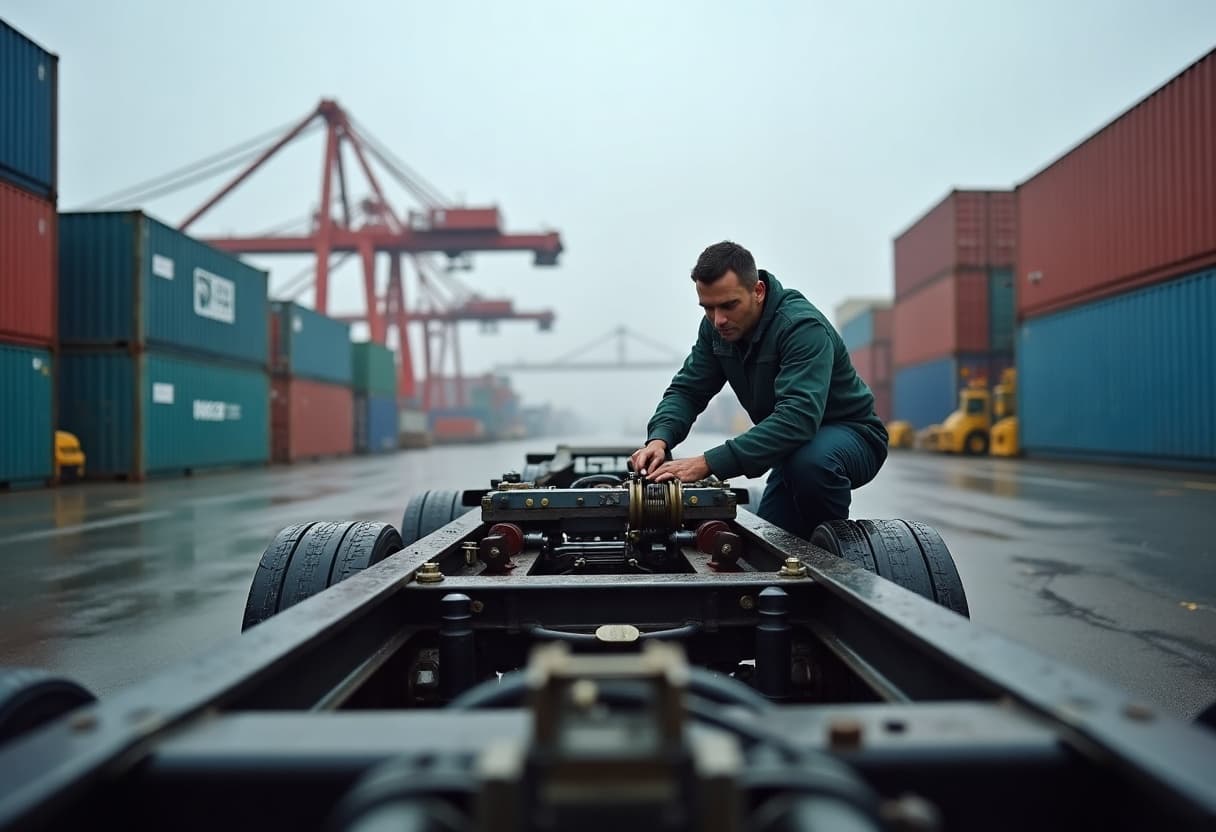
Every load that comes off a ship at the Ports of Seattle and Tacoma spends its first road miles in a box on a chassis. When either one is out of service — a door that won't seal, a brake chamber leaking air, a light bar gone dark — that unit stops earning until it's fixed. For drayage and intermodal operators across the Puget Sound corridor, container and chassis repair isn't a side-topic; it's uptime.
Here's what that work actually involves, how to decide between repairing and replacing, and how to keep it from eating your schedule.
The two halves of "container repair"
People say container repair and mean two different layers of equipment:
The box. Doors and door hardware take the most abuse — hinges, cam rods, and locking gear get sprung, bent, or seized, and worn door gaskets quietly let water in until a consignee rejects a load. Floors go soft from forklift traffic and moisture. Panels and roofs pick up handling damage that starts as cosmetic and ends as leaks.
The chassis. Underneath, it's a trailer like any other — brakes, air lines, lights, tires, landing gear, kingpin, frame. This is the half that puts equipment out of service at inspection time: lighting faults, brake adjustment, and air leaks are perennially among the most common violations found at DOT roadside checks.
A drayage operation needs both layers healthy. A watertight box on a chassis with a failed brake chamber moves nothing; neither does a perfect chassis under a box a shipper won't load.
What fails first in the Puget Sound corridor
Working out of Sumner — minutes from the Port of Tacoma via SR-167 and an easy run up I-5 toward Seattle's terminals — we see the same pattern across local fleets:
- Door hardware and gaskets lead the list on boxes. Wet-side weather finds every worn seal, and a rejected wet load costs far more than a reseal.
- Lights and wiring lead on chassis. Salt air and constant couple/uncouple cycles chew through connectors.
- Brake adjustment and air leaks follow close behind — and they're the items most likely to put a unit out of service at a scale or terminal check.
- Tires and landing gear round it out: flat-spotted rubber from yard drags, and landing gear bent by hard drops.
None of this is exotic. Most of it is preventable with the same discipline that keeps a truck fleet healthy: scheduled inspection intervals, and fixing small findings before they become out-of-service findings. If you already run a preventive maintenance program for your trucks, your boxes and chassis belong on the same calendar.
Repair or replace? Run the math, not the habit
For localized damage, repair wins comfortably: a door reseal, a section of flooring, a patched panel, brake and lighting work — all of it costs a small fraction of sourcing another serviceable unit and keeps equipment you already know in rotation.
Replacement starts making sense when the damage is structural and spread out — a racked frame, multiple compromised cross-members, corrosion that has gone from surface to section loss. The honest way to make the call is an inspection first, priced against what a comparable used unit actually costs in the current market, not what it cost the last time you bought one.
The expensive mistake is deferring the decision: running a marginal unit until it fails at the terminal, then paying for the repair and the missed turn and the tow.
Why mobile service changes the economics
The hidden cost in container and chassis work isn't the labor — it's the logistics of getting a low-value-per-mile piece of equipment to a shop and back. Dragging a chassis across town for a two-hour brake job burns a driver, a tractor, and a day.
That's why so much of this work is better done where the equipment sits. Lights, brakes, air systems, tires, door hardware, seals — our mobile and on-site service handles them at your yard, so a unit goes from red-tagged to road-ready without ever leaving the lot. For port-adjacent operations running tight drayage windows, that's usually the difference between a maintenance item and a missed booking.
Keep the paperwork half honest too
Two habits save Puget Sound operators real money:
- Document interchange condition. Photograph boxes and chassis at pickup and return. Damage disputes at interchange are settled by evidence, and the party without photos loses.
- Close the loop on repairs. Keep repair records against unit numbers, not just invoices. Patterns — the same chassis eating brake shoes, the same box resealed twice in a season — are how you spot the unit that belongs on the replacement list.
The bottom line
Container and chassis repair in the Seattle–Tacoma corridor is mostly unglamorous, high-frequency work: doors, seals, floors, lights, brakes, tires. Handled on a schedule, it's cheap insurance on every drayage turn. Handled reactively, it shows up as out-of-service tags and missed windows at the worst possible time.
If you run boxes or chassis anywhere in the Puget Sound area and want them inspected, repaired, or put on a maintenance schedule, talk to us — or have our mobile techs come to your yard and see the equipment where it works.
Frequently asked questions
What is the difference between container repair and chassis repair?+
Container repair covers the box itself — doors and door hardware, floors, roof and panel damage, and seals that keep cargo dry. Chassis repair covers the running gear underneath it — brakes, lights, tires, air systems, landing gear, and the frame. Drayage operators in the Seattle–Tacoma corridor usually need both, because a box that passes inspection on a chassis that fails one still doesn't move freight.
What are the most common container and chassis problems?+
On containers: sprung or seized door hardware, worn door gaskets that let water reach cargo, soft or delaminated flooring, and roof damage from handling. On chassis: lighting faults, brake adjustment and air leaks, tire wear, and landing gear damage — the same items that fail DOT roadside inspections most often.
When should a container be repaired versus replaced?+
Repair usually wins when damage is localized — a door reseal, a floor section, patchable panel damage. Replacement math takes over when the frame or multiple structural members are compromised, or when repair cost approaches the price of a serviceable used box. An inspection first keeps you from paying twice.
Do you have to bring equipment into a shop for container or chassis work?+
Not always. Much chassis work — lights, brakes, tires, air system repairs — and container door or seal work can be done on-site at your yard, which matters when pulling a unit out of rotation costs you a drayage turn. That is exactly what mobile fleet service is for.