Commercial Truck Maintenance Guide
Commercial truck maintenance guide for owner-operators in the Seattle and Sumner, WA area. Preventive schedules, DPF care, fluid checks, and mobile repair from Emerald Fleet Services.
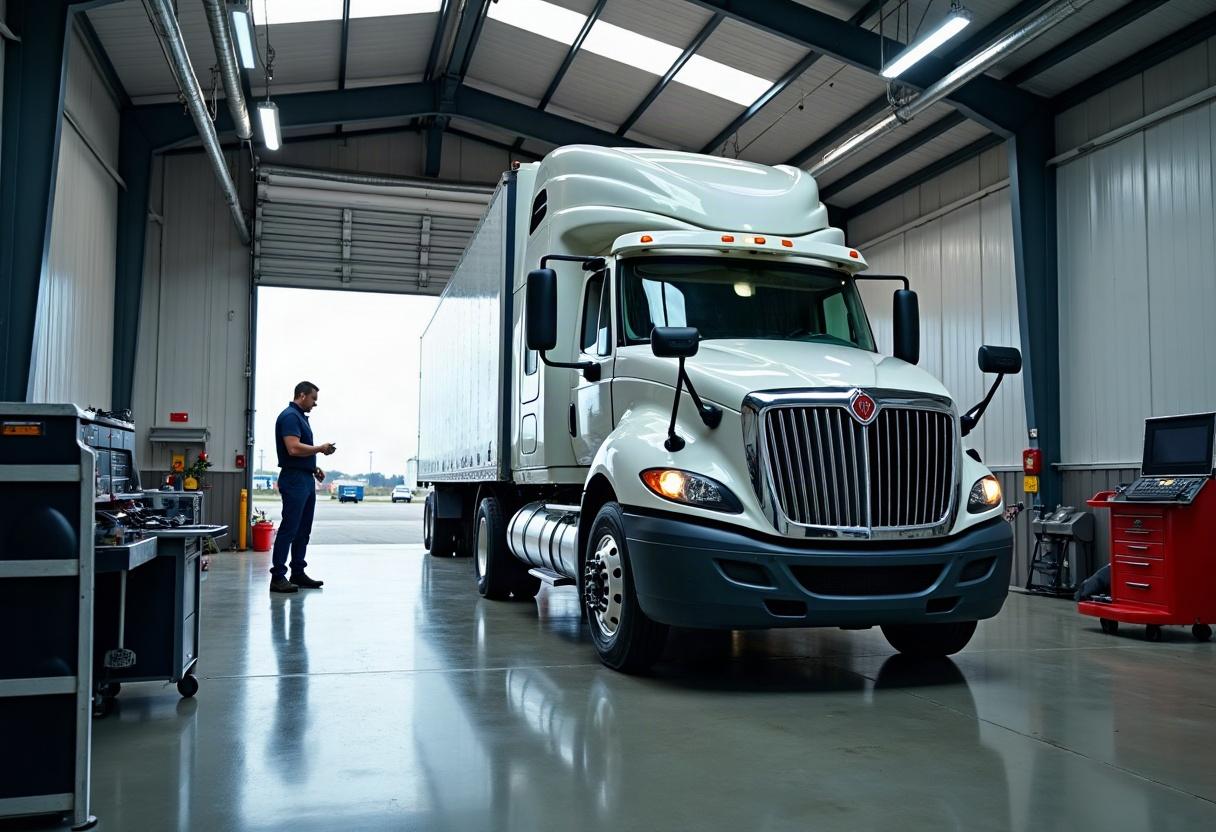
If you own the truck you drive, maintenance is not a line item on someone else's budget. It is your paycheck. A single missed oil interval or a DPF that you let ride one load too long is the difference between a profitable week and a parked week eating into your settlement. For an owner-operator running freight through the Seattle metro and the Puget Sound corridor, commercial truck maintenance is the work that keeps every other load possible.
This guide is written from the shop floor at Emerald Fleet Services in Sumner, WA, not from a marketing desk. It lays out a practical preventive maintenance plan for owner-operators who run commercial trucks in and around the Seattle area. The intervals and habits here come from what we see every week on heavy-duty diesels in our bay and on the roadside.
Build a preventive maintenance schedule and actually follow it
The single biggest uptime lever for an owner-operator is consistency. A documented preventive maintenance program turns surprise failures into scheduled service. For most commercial trucks running the I-5 and SR 167 corridors, a sensible baseline is:
- Oil and filter change every 10,000 to 15,000 miles
- Full inspection every 3 months or 25,000 miles, whichever comes first
- DPF and emissions check at every service, not just when a light comes on
- Battery load test before fall and again midwinter
Keep a service record for your truck. When a warning light shows up or a regen will not finish, that record tells you whether the issue is new or part of a pattern. It is also what a DOT inspector asks for at the scale on I-5 near North Bend.
A scheduled four-hour service visit is always cheaper than a roadside call at two in the morning. Our services page breaks down what we cover in a standard preventive maintenance visit, from inspections and fluid checks to routine upkeep.
Stay ahead of the DPF and emissions system
Modern diesel aftertreatment systems are unforgiving when neglected. If you idle in port queues or run short downtown routes around Seattle and Tacoma, your truck rarely completes a passive regen. The DPF loads up, a sensor drifts, and the next thing you know the dash is in derate on the West Seattle Bridge with a load due in two hours.
A few habits keep this from happening:
- Pull and clean the DPF on a set interval, not when the warning lamp appears
- Check DEF quality with a refractometer at every service
- Log regen frequency so you can spot a failing injector early
- Replace sensors proactively on a high-mileage truck
For a deeper look at how this fits a broader maintenance plan, see our Seattle fleet maintenance guide. The same habits that keep one truck running keep a fleet running, and an owner-operator benefits from the discipline even more because there is no spare truck in the yard.
Treat oil and fluids as uptime insurance
Oil is cheap. Bearings are not. On a heavy-duty diesel, stretching an oil interval to save forty dollars risks a nine-thousand-dollar lower end rebuild. Stick to the manufacturer interval for oil, and shorten it for a truck that pulls heavy grades or idles long hours at the port.
Check the rest while you are under the hood:
- Transmission fluid level and condition
- Coolant strength and additive package
- Power steering and brake fluid
- Differential and hub oil
A fifteen-minute fluid walk-around at every fuel stop catches leaks before they become roadside events. That habit alone has saved more owner-operators from a tow than any diagnostic tool we own.
Inspect brakes, air, and tires every visit
Wet Seattle pavement and stop-and-go traffic wear brakes faster than most drivers realize. At every preventive maintenance visit, measure lining thickness, check slack adjusters, and drain the air tanks. Moisture in the air system freezes in winter and corrodes valves year-round.
Tires are the other silent budget killer. A dual pair run ten psi low costs fuel and sheds miles of tread. Check pressures cold, log tread depth, and rotate per the manufacturer schedule. Alignment matters too. A truck that dog-tracks down SR 167 eats rubber and fuel until you set the toe.
Use the electrical system as an early warning
Today's trucks run dozens of modules. A failing sensor or a chafed harness does not always trigger a lamp right away. A trained tech with the right scanner can read pending codes and voltage trends that point to a problem weeks before it strands a load.
We run full electrical diagnostics on every preventive maintenance visit. Catching a slow battery drain or a weakening alternator in the bay means you are not calling for mobile repair on the shoulder of I-405 at rush hour. For more on what a full repair shop should be able to diagnose, our diesel repair guide walks through what separates a shop that can read the engine from one that guesses.
Keep a mobile repair partner on speed dial
Even with a solid maintenance plan, trucks break. A blown air line, a no-start, or a derate can happen anywhere between the Port of Seattle and the warehouse district. That is where mobile repair earns its keep.
Emerald Fleet Services runs mobile roadside and on-site repair across the Greater Seattle area, including Sumner, Auburn, Fife, Tukwila, and the I-5 and SR 167 corridors. A mobile call costs a fraction of a tow and gets the truck back on the road the same day in most cases. Save the number before you need it: (253) 321-1828.
What you get with Emerald Fleet Services
We are a family-owned shop at 15022 Puyallup St #101 in Sumner, WA, just off the SR 167 corridor with straight runs to I-5, the Port of Tacoma, and the warehouse districts around Auburn and Kent. We use genuine OEM parts on engine, transmission, and emissions work, and we back our repairs with written warranties on parts and labor.
Here is what we handle on a regular schedule for owner-operators:
- Preventive maintenance: inspections, fluid checks, and routine upkeep
- Heavy-duty engine rebuilds and major repair
- DPF and emissions service
- Mobile roadside and on-site repair
- Electrical diagnostics and module work
- Oil changes, PM inspections, and general fleet maintenance
Get your truck on a plan
If you own and run a commercial truck in the Seattle area, the cheapest repair is the one you schedule. Call us at (253) 321-1828 or reach out through our contact page to set up a preventive maintenance plan built around how you actually run. We will look at your truck, your routes, and your uptime goals, and we will build a schedule that fits the miles you drive.
Frequently asked questions
How often should an owner-operator schedule commercial truck maintenance?+
Most owner-operators running freight through the Seattle and Sumner area do well with a preventive maintenance inspection every 10,000 to 15,000 miles or roughly every 3 months. Tighten that interval in winter and after heavy-load weeks on the I-5 and SR 167 corridors.
What does commercial truck maintenance include at Emerald Fleet Services?+
Our preventive maintenance covers oil and filter changes, DPF and emissions checks, brake and air system inspections, battery and charging tests, tire and alignment checks, fluid top-offs, and electrical diagnostics. We document each visit so you have a real service history for your truck.
Does Emerald Fleet Services offer mobile maintenance and repair near Sumner?+
Yes. Our mobile roadside and on-site repair brings the shop to you across the Greater Seattle area, including Sumner, Auburn, Fife, and the I-5 and SR 167 corridors. Mobile calls cover diagnostics, fluid leaks, sensor swaps, and emergent repairs so you avoid towing time and cost.
Does Emerald Fleet Services use OEM parts and offer warranties?+
Yes. We install genuine OEM parts on engine, transmission, and emissions repairs, and we back our work with written warranties on parts and labor. We are a family-owned shop in Sumner, WA, treating your uptime as our reputation.